| Day 1. (Sun) - Fortaleza / City Tour + Cumbuco |
 |
 |
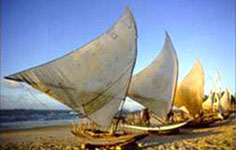
Morning visit to the city including: the coast road with the Iracema Meireles and do Futuro beaches; the Art and Popular Culture Museum, Fortaleza Nossa Senhora (XVII Century), the José de Alencar Theatre and the Tourism Centre, where it is not possible to resist the purchase of local artisan craft in wood, ceramic, and “fillet” and “labyrinth” lace work. The principal attraction of the Cumbuco beach is its dunes with their fine white sand. Here everybody has a buggy trip and goes esquibunda, Ceará’s most popular sport, where one boards - seated or standing - down the dunes. The buggy trips can be “with or without excitement”. |
|
| Day 2. (Mon) – Fortaleza / Canindé / Quixadá |
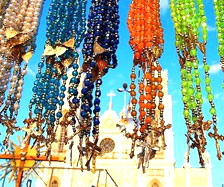
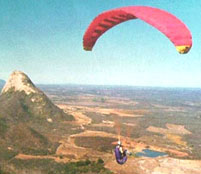
| Morning trip to Canindé. Northeasterners from many states go to Canindé, the second world biggest devotion center to Saint Francisco. This strong country man attaches faith and pilgrimages to worship Saint Francisco. Night in Urucum Hill. In Quixadá, the combination of thermals and winds is favorable for hang-gliding. |
|
 |
|
 |
|
| Day 3. (Tues) – Quixadá |
 |
|
 |
|
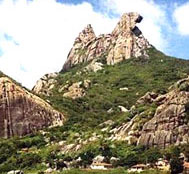
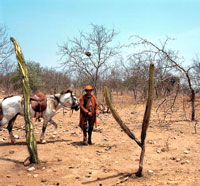
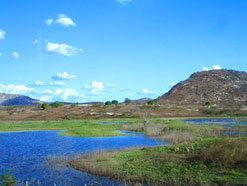
On the hinterland, the caating vegetation and rocky formations are clearly seen. The Monumental Valley Stands out in this environment, between Quixadá and Quixeramobim, bisides caves, monoliths and mountains. Some with odd shapes like the chicken shaped stone in Quixadá. The hinterland captivates for its strong people and their beautiful simplicity. |
|
| Day 4. (Weds) – Quixadá / Quixeramobim |
| Morning visit the “Letreiro” Stone, with a great arqueological value and its rupestrian writings. Rupestrian paitings show how our ancestors lived: hunts, sexual orgies, unknown animals and whales show that not onlm our customs, but also the landscape have changed greatly. |
|
 |
|
 |
|
| Day 5. (Thurs) – Quixadá / Cotton Route / Dinossaurs Valley |
 |
|
 |
|
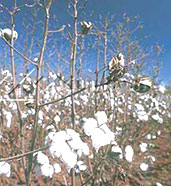
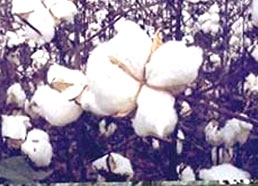
Morning journey through the cotton route. Ceará is one of most important textile center in the world. Cotton is traditionally important crops in Ceará. Industry has grown rapidly with the development os small communities subsidized and producing especially cotton. The State most important agricultural area cultivating cotton in Ceará |
|
| Day 6. (Fri) – Dinosaurs Valley / Juazeiro do Norte. |
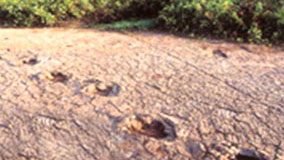
| Morning departure for the shores of the “Shallow Lake”, where the world’s dinosaurs lived 120 million years ago. In the Valley of the Dinosaurs, found in the municipality of Sousa, there exist the famous dinosaur footprints encrusted in the ground and it is considered one of the most important pre-historic sites in the world. The passage of these animals through the Paraiban wilderness, millions of years ago, awakes the interest of both Brazilian and foreign scientists and attracts, as well, many visitors. The on to Cariri. Region of big natural and cultural wealth. |
|
 |
|
| Day 7 (Sat) – Juazeiro do Norte / Santana do Cariri |
 |
|
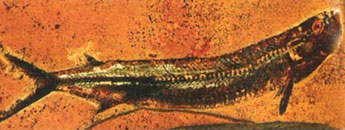
After breakfast a trip to the Palaeontological Museum in Santana do Cariri. Once, millions of years ago, covered by the sea, the Araripe ridge is one of the most important archaeological sites in the country. The museum holds more than 700 fossils of fish, insects, reptiles, amphibians and vegetation, some preserved by the arid soil of the Northeast for more than 100 million years. |
|
| Day 8 (Sun) – Juazeiro do Norte |
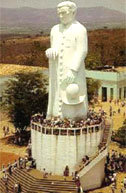
| Father Cícero Romão Batista, from the XIX and XX centuries, is the famous religious name to be heard here in the Northeast. After having supposedly worked a miracle, he was banned from saying Mass. When Juazeiro became a city, he was the first Mayor. After his death in 1934, he became a kind of popular Saint. We will see his statue, 25 metres high with an 8-metre base in the hill garden. On the Day of the Pilgrim, which precedes All Soul’s Day, more than 500,000 people gather here. We will visit the chapel of N Sra do Perpétuo Socorro (1908), where Father Cicero’s tomb is, in Praça Socorro (Socorro Square), and the main church of N Sra dos Dores (1887) in Praça dos Romeiros (Pilgrim’s Square). The Father Cicero Memorial Museum has a collection of objects, paintings and photographs from the life of this Holy person. Mannequins recreating scenes from his life can be found in the Vivo Padre Cicero Museum, where we will also find a salon with offerings to the saint. |
|
 |
|
| Day 9 (Mon) – Juazeiro do Norte / Conceição das Crioulas / Triunfo |
 |
|
 |
|
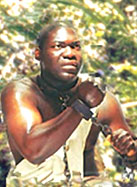
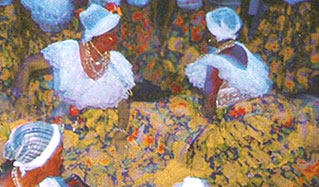
Morning trip to Conceição das Creoulas, a remnant of the negro community from the negro quarters during the days of slavery. For each ten brazilians, three are black or mullatos and on them weighs the inheritance of almost four centuries of captivity. Afternoon trip to Triunfo for lodging. |
|
| Day 10 (Tues) – Triunfo/ Ibimirim / Buíque |
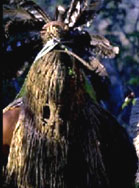
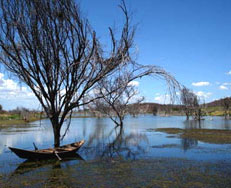
| Morning visit Quiridalho Mountain, with natural shelters and caves, registering rupestrian paintings; the Puiú Lagoon has high salinity in the left side, while in the right side we will find fresh water. Ibimirin presents a wonderful artisan work, producting hole imagens in wood, as well as, tapestries, straw and seeds work. In moon light evenings we will participate in “Praiá” rituals, danced by indians in Kambiwá reserve. |
|
 |
|
 |
|
| Day 11 (Weds) – Buíque / Kapinawá Reserve |
 |
|
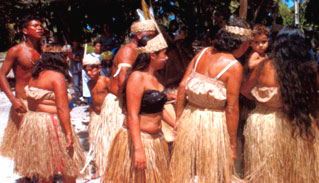
We visit to the indigenous Kapinawá Reserve, where we will be able to find beautiful dry grass and straw artisan work produced by the Indians. Their cooperative spirit maintains them united and the division of labour is by sex and age. Trekking to “Serra do Elefante”. In the afternoon we will participate in Toré and coconut samba, dance by the Indians around the Cross of the Church of São Sebastião, on the native reserve. The native song and dance is principally dedicated to their rituals. Today we obey the indigenous rituals when we eat: “Bode no Buraco” (kid barbequed in an oven excavated in the ground). |
|
| Day 12 (Thurs) – Buíque / Catimbau Valley |
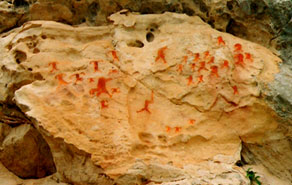
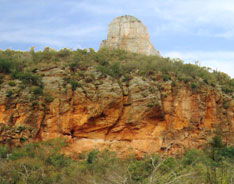
| Morning trekking visit to the Canyons, an area of ridges, valleys and rocks, which impresses with its primordial magnificence, rock formations and beauty. The Catimbau Valley has dramatic rock formations, but the major attractions are the rupestrian inscriptions made at least five thousand years ago. After the Serra da Capivara Parque, this is the most important archaeological park in the country, with 23 sites catalogued. The graphics were made by tribes from different eras, and who used different painting techniques. Afternoon we take the trail to “Igrejinha” site, where we will find typical rock formations. We will visit Zé Bezerra craftworks. |
|
 |
|
| Day 13 (Fri) – Buíque / Alcobaça Site |
 |
|
 |
|
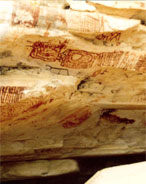
Morning visit to the “Alcobaça Site”, where we will appreciate different archaeological area with rocky shelters and unequalled prehistoric paintings and carvings. Rupestrian paintings show how our ancestors lived: hunts, sexual orgies and unknown animals, show that not only our customs, but also the landscape have changed greatly. Prehistoric sites are woven into the vegetation of the scrub. |
|
| Day 14 (Sat) – Buíque / Caruaru / Recife |
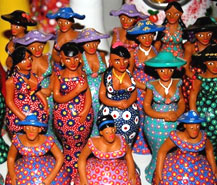
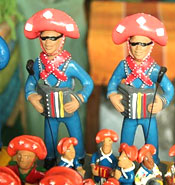
| Caruaru, considered by UNESCO to be “the most important figurative art centre in the Americas”, outstanding for its artisan craftworks and the festivals in June, winning for itself the title of the “Forró Capital” (Forró is the typical mid-year country dance in the North-east of Brazil). Morning visit the Alto do Moura, the residence and workshop of several artists who work with clay. |
|
 |
|
 |
|
| Day 15 (Sun) - Recife / Olinda. |
 |
|
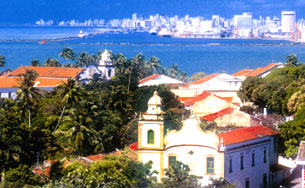
The Capital of Pernambuco until 1937, Olinda possesses important colonial architecture and because of this, in 1982, UNESCO declared its historic centre a Cultural Heritage of Humanity. The foundation of Olinda dates from 1535. The original small town was constructed by Duarte Coelho Pereira, the donee of the Captaincy of Pernambuco, and became Capital. A walking tour of the historic centre, where the Heights and Church da Sé (1537), the old slave market, the steep street to and the convent of São Francisco (1585), the Episcopal Palace and the São Bento Monastery, which ran the first ever law course in Brazil, all stand out. |
|