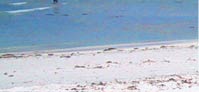
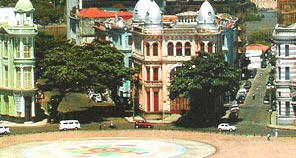
Visit to the city, including the beach, Boa Viagem church, the Capibaribe and Beberibe Rivers and the Golden Chapel. Trip to the Five Points Fort, Ruas (streets) do Sol and da Aurora (Old Recife), Brum Fort, Pátio de St. Pedro, Campo das Princesas, the Maurício de Nassau Bridge (the oldest in Brazil). Visit to the city of Olinda – Historic and artistic monument (said title awarded by UNESCO), the Heights and church da Sé (1537), the old slave market, the steep streets and convent of St. Francisco (1585). We suggest catamaran along Beberibe and Capibaribe Rivers.
Day 2. (Mon) - Recife / Maragogi / Maceió
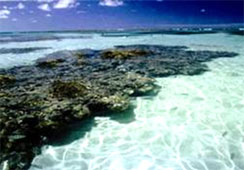
The north Alagoan Littoral, where reefs, extensive coconut groves and primitive beaches, is the last stop of the north coast, special for diving lovers. Maragogi is located at 136km from the capital Maceió. Tourists should take a catamaran tour to the-called galés, which are the reefs of rich flora and fauna. As the boat docks, tourists can already perceive the dimension of Maragogi’s beauty. The guides say that Maragogi has America’s largest continuous coral bank. There are several corals with different tonalities giving a special coloring to the water. During low tide, it does not get deeper than a meter and a half. Arriving at the pools its seems a giant aquarium. For those who like to dive, the guides usually rent snorkels and goggles.
Day 3. (Tues) - Maceió / Marechal Deodoro / French Beach
Morning visit to the historical city of Marechal Deodoro with its important architectural, artistic and religious heritage from colonial Brazil. The city was founded in 1522 and is located between the ocean and the Manguaba Lagoon. Marechal Deodoro is the birth place of the first president of Brazil, Marshal Deodoro da Fonseca, who proclaimed the Republic. Their baroque and colonial styles have been carefully preserved on its buildings, churches, houses and at the town hall. The principal attractions are the Convent of St. Francisco (1684), the original church of Our Lady of Conception (1755) and the Museum of Sacred Art, sited in a XVIII Century Franciscan convent. We go on to the French Beach with its warm and crystal waters.
Day 4. (Weds) - Maceió / Historic Tour + Foz de São Francisco / Penedo.
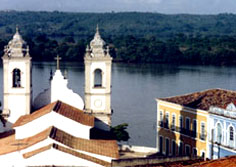
After breakfast, trip to the paradise of St. Francisco River estuary, with its deep, green waters. Old “Chico” is an icon that is part of Penedo’s local folklore. We can walk along the dune covered beaches and bathe in the waters. The trip finishes in the city of Piaçabuçu. We continue to Penedo, created by Duarte Coelho in 1560 and located along side São Francisco River. Penedo is a historic fort where architecture, landscapes and culture are all well preserved, is a reference from brazilian colonial time. Back to those times, Penedo used to be a place where members of Portuguese society as well as Holland people and sailors stayed during their expeditions.
Day 5. (Thurs) – Penedo
/ Xingó/ Catamarã Canyons
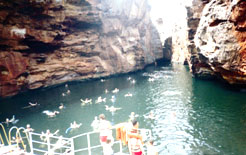
Morning visit to the Chesf viewpoint (Hydroelectric Power Station) the second biggest of Brazil and sixth of the world between Alagoas and Sergipe. Then by catamaran to the Canyons of São Francisco, passing rock formations (Pedra do Japonês [The Japanese Stone], da Gaviota [the Seagull Stone]), Morro do Macaco (Monkey Peak), and Paraíso do Talhado (Carved Paradise), enjoying the sparkling scenery of the entire canyon which borders Velho Chico. At Talhado tourists can swim in the green clean water of the river. Evenight meal at the hotel with folk dances.
Day 6. (Fri) –Xingó / Paulo Afonso / Raso da Catarina
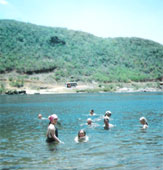
After breakfast, we take a trip by catamaran, passing Piranhas (Alagoas) and Angicos (Sergipe), stopping at the Restaurant Angicos for a swim in the river, where we can enjoy a seafood, free-range chicken and the famous Friar’s dessert. At the same time, we can take a walk through where Lampião and his band died (optional). We will visit the Historic Centre in Piranhas and visit the Cangaço Museum.
Day 7 (Sat) - Paulo Afonso / Águas Belas / Garanhuns
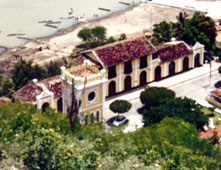
Morning trip to the Indian village of Fulni-ô, where the ancestral language and many of the customs are still preserved. We will visit the main church of Nossa Senhora de Conceição (XVIII Century) and one of the largest open-air fairs in the state. We will be able to andfor its fairs. We can admire the old railway station and the Povoado do Castainho (Settlement of the Chestnuts), a remnant of the Negro community from the Quilombo dos Palmares (The Negro quarters during the days of slavery). Three in ten Brazilians are black or mulatto and almost four centuries of slavery still weighs on them. Once sold, the slaves had to go where their new masters sent them.
Day 8 (Sun) - Garanhuns / Porto de Galinhas / Recife
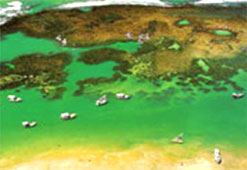
After breakfast, we continue on to the Porto de Galinhas, paradise that charms everyone, considered to be the most beautiful beach in Brazil. It is a place that harbors a bountiful nature, special for diving lovers. Tourists should take a boat tour to the reefs of rich flora and fauna, which can only be made during low tide. There are several corals and fishes with different tonalities giving a special coloring to the water. At low tide, natural swimming pools appear (rafting optional), moulded from the corals, with transparent waters and colorful small fish, which love to eat breadcrumbs from your hand. Porto de Galinhas offers white sands, an unending wall of coconut groves line that frames its entire shore and an expanse of emerald green sea wherever you look.
Av. Hélio
Falcão, 530 - Boa Viagem - Recife/PE - Brasil - 51021-070 | PABX: (55) 81-3328.6007 - rbm@rbmturismo.com.br