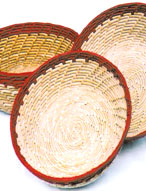
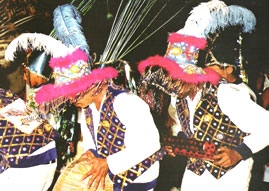
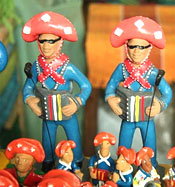
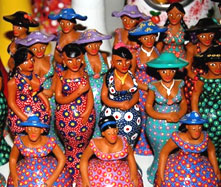
Breakfast then a sightseeing tour of the city. We can appreciate artisans and folklore of Teresina. Artisan’s characterise fibre and straw art, sculptures (ceramic), weaving (cotton), or lace work and embroideries. The folklore of Teresina reflects the cultural manifestations of its population, such as “bumba-meu-boi”, which reflects the era of the colonization and occupation of the northeast.
Day 2 (Mon) – Teresina / Floriano / Serra de Capivara
Departure for Floriano after breakfast, on the right bank of the mid Parnaíba River (253km). Here lived a free society, always in movement and energetic, dedicated to an uncomplicated pastoral life. Strong, daring men, the true pioneers of the Parnaíba Valley set out from this irradiating nucleus of expansion. This was the principal and most important geographical accident of the First Captaincy. Today, Floriano is the principal educational centre for the south of Piauí and Maranhão States, having influence over almost 30 municipalities. Lunch in Floriano, then on to our lodgings in Serra da Capivara.
Day 3. (Tues) – Serra da Capivara
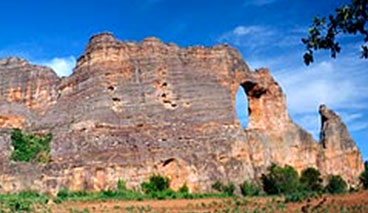
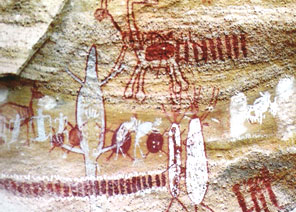
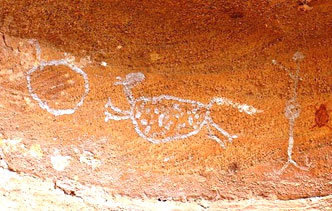
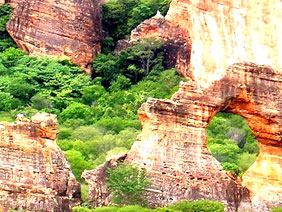
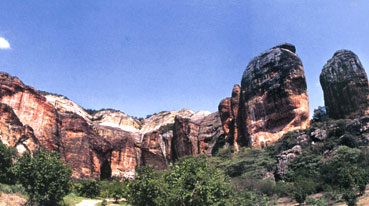
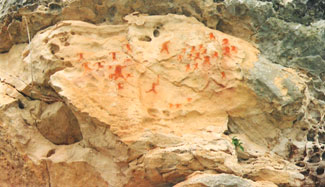
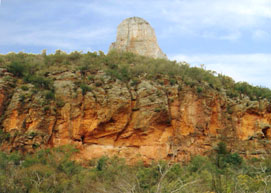
Archaeological sites show human occupation from 50,000 years ago, 30,000 years before man came from Siberia. Rupestrian paintings show how our ancestors lived: hunts, sexual orgies, unknown animals and whales show that not only our customs, but also the landscape have changed greatly. We will visit 129,140 hectares with the greatest concentration of prehistoric sites in America woven into the vegetation of the scrub savannah. The main attractions of the park are 260 archaeological sites, with 30,000 rupestrian paintings catalogued and which are considered to be World Patrimony by UNESCO. The landscape is noted for its diversity of the scenery. Leaving the tableland we find enormous sharp declivities and typical rock formations. Morning visit to Baixão da Perna with 12 archaelogical sites and Toca de Cima do Pilão.
Day 4. (Weds) – Serra da Capivara
Today’s visit is to the Desfiladeiro da Capivara (Capivara Gorge) with its magnificent archaeological sites, rich in rupestrian paintings. We follow a trail through dense vegetation (2km) to Boqueirão do Papagaio (literally “the big mouth of the parrot”) where we will find rocky shelters with unequalled prehistoric paintings. The sites on the “circuit of the small deer” are reached along a steep trail (2 hours), but we will be rewarded by blue paintings, which are unique in Latin America. Then, to finish in grand style, we will pass through Toca do Papagaio (The Parrot’s Lair), the first archaeological site found in the park.
Day 5. (Thurs) – Serra da Capivara
In the morning we will visit Baixão da Pedra Furada (The Drop of the Perforated Stone), a 100-metre canyon, with various archaeological sites. In Boqueirão da Pedra Furada (The mouth of the Perforated Stone) we can see the oldest remains of occupation in the Americas. This is the principal attraction with handrails and nocturnal illumination. The visit to the heights of Pedra Furada is steep (1 hour), but we will be rewarded by the view. In the afternoon we will visit Baixão do Sítio do Meio, the second most important in the Park, with rupestrian figures more than 25,000 years old. Here a worked stone hatchet was found which is 9,200 years old. We will also pass through the Baixão das Mulheres, a 60-metre canyon with three archaeological sites, noting their rupestrian paintings (a 1 hour walk).
Day 6. (Fri) – Serra da Capivara
After breakfast we take the trail to Calderão de Rodrigues and das Canoas (Rodrigues’ Cauldron and The Canoes) to appreciate the peaks and valleys of impressive ravines. The Caldeirão de Rodrigues is a reservoir with 2 archaeological sites with rupestrian paintings. In the afternoon we can see the ritual of the Andorinhas (Swallows) as they return to nest for the night, with their exquisite aerial acrobatics and characteristic calls. Return to the hotel for the night and to typical delicious Northeastern dinner: free-range chicken, roast goat and mutton or jerked beef stew.
Day 7. (Sat) – Serra da Capivara / Petrolina
Morning visit to the American Man Museum, which has the results of 30 years of investigation in the
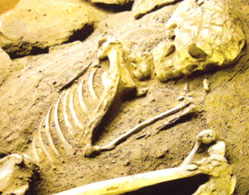
archaeological and palaeontological fields, showing the evolution of man, the climate and the landscape in America. There are tools, ceramics, archaeological remains (such as human bones, funerary urns and mummies), and reproductions and moulds of rupestrian work. Then on to Petrolina.
Day 8. (Sun) – Petrolina
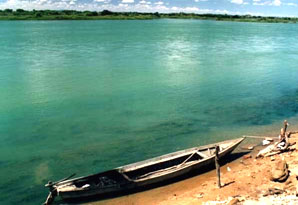
The legend says that, who drinks of the water of the San Francisco, never more leaves to come back to Petrolina. And the legend becomes a fact. With its limpid warm waters, the River San Francisco is one of the great attractions of Petrolina, the city that more grows in the northeast. A stroll of boat for the edges of the city and the islands, the poetry that the waters sing in set with the wind. Everything in Petrolina is to see, everything in Petrolina is to feel itself and to keep forever in the souvenir.
Day 9 (Mon) – Petrolina / São Francisco Lakes.
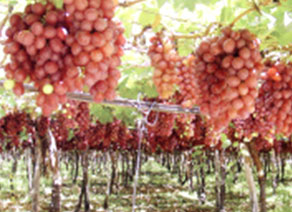
Morning trip to São Francisco Lakes. History, ecology, adventure, advanced technology in fruit and energy production make part of the “Vale do São Francisco”. The region’s diversity, with a hot and dry climate is bathed by the cold waters of the São Francisco’s River. The culinary is made up of Su rubim (a noble, river water fish), goat, sheep, salt meat, dishes, delicious home made candies, rum and exportation wines.
Day 10 (Tues) – São Francisco Lakes
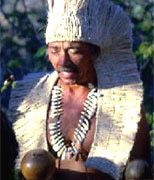
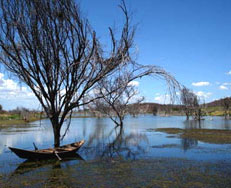
The São Francisco offers tranquility and tameness for skiing, banana boat rides and fishing. In all, that’s about exploring a land full of magic, delights and traditions. Morning boat trip. Afternoon visit Pankararu Indigeus Reserve.
Day 11 (Weds) –São Francisco Lakes / Ibimirim / Buíque
Morning visit Quiridalho Mountain, with natural shelters and caves, registering rupestrian paintings; the Puiú Lagoon has high salinity in the left side, while in the right side we will find fresh water. Ibimirin presents a wonderful artisan work, producting hole imagens in wood, as well as, tapestries, straw and seeds work. In moon light evenings we will participate in “Praiá” rituals, danced by indians in Kambiwá reserve.
Day 12 (Thurs) – Buíque / Catimbau Canyons
Morning trekking visit to the Canyons, an area of ridges, valleys and rocks, which impresses with its primordial magnificence, rock formations and beauty. The Catimbau Valley has dramatic rock formations, but the major attractions are the rupestrian inscriptions made at least five thousand years ago. After the Serra da Capivara Parque, this is the most important archaeological park in the country, with 23 sites catalogued. The graphics were made by tribes from different eras, and who used different painting techniques. Afternoon trekking tour to Serra das Torres, ancient dead Volcano.
Day 13 (Fri) – Buíque / Alcobaça / Kapinawá Reserve
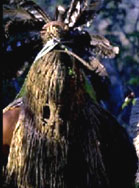
Morning visit to the “Alcobaça Site”, where we will apreciate different archaeological area with rocky shelters and unequalled prehistoric paintings and carvings. Rupestrian paitings show how our ancestors lived: hunts, sexual orgies and unknown animals, show that not only our customs, but also the landscape have changed greatly. Afternoon visit to the indigenous Kapinawá Reserve, where we will be able to find beautiful dry grass and straw artisan work produced by the Indians. Trekking to “Serra do Elefante”. In the evening we will participate in Toré and coconut samba. The native song and dance is principally dedicated to their rituals. Today we obey the indigenous rituals when we eat: “Bode no Buraco”.
Day 14 (Sat) – Buíque / Caruaru / Recife
Morning departure for Caruaru, considered by UNESCO to be “the most important figurative art centre in the Americas”, outstanding for its artisan craftworks and the festivals in June, winning for itself the title of the “Forró Capital”. We will visit the Alto do Moura, the residence and workshop of several artists who work with clay. Then, on to our lodgings in Recife.
Day 15. (Sun) – Recife / Historic Tour / Olinda.
Duarte Coelho found a strategically place to install, in the high hills, the village that became Olinda. In 1637, Maurício de Nassau assumes the government. Cult, Nassau leads a urbanity revolution in the city: streets and several bridges were constructed. Visit to the city, including the beach, Boa Viagem church, the Capibaribe and Beberibe Rivers and the Golden Chapel. Trip to the Five Points Fort, streets Sol and Aurora (Old Recife), Brum Fort, Pátio de St. Pedro, Campo das Princesas, the Maurício de Nassau Bridge (the oldest in Brazil). Visit to the city of Olinda - Historic and artistic monument (said title awarded by UNESCO), the Heights and church da Sé (1537), the old slave market, the steep streets and convent of St. Francisco (1585).
Av. Hélio
Falcão, 530 - Boa Viagem - Recife/PE - Brasil - 51021-070 | PABX: (55) 81-3328.6007 - rbm@rbmturismo.com.br