| Day 1 (Sun) - Recife / Historic Tour/ Olinda |
 |
 |
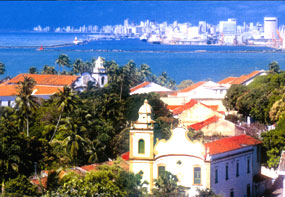
Duarte Coelho found a strategically place to install, in the high hills, the village that became Olinda. In 1637, Maurício de Nassau assumes the government. Cult, Nassau leads a urbanity revolution in the city: streets and several bridges were constructed. Visit to the city, including the beach, Boa Viagem church, the Capibaribe and Beberibe Rivers and the Golden Chapel. Trip to the Five Points Fort, streets Sol and Aurora (Old Recife), Brum Fort, Pátio de St. Pedro, Campo das Princesas, the Maurício de Nassau Bridge (the oldest in Brazil). Visit to the city of Olinda - Historic and artistic monument (said title awarded by UNESCO), the Heights and church da Sé (1537), the old slave market, the steep streets and convent of St. Francisco (1585). |
|
| Day 2 (Mon) – Recife / Porto de Galinhas / Caruaru |
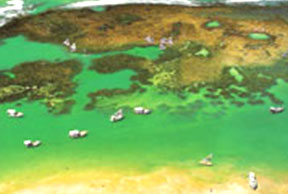
| After breakfast, we continue on to the Porto de Galinhas, paradise that charms everyone, one of the greatest tourism attraction hubs of the State of Pernambuco. Paradisiacal setting shaped by crystal-clear waters inhabited by colorful fish, surrounded a long line of reefs. It is a place that harbors a bountiful nature. Tourists should take a raft tour to the reefs of rich flora and fauna. There are several corals and fishes with different tonalities giving a special coloring to the water. Exotic fauna and flora, crabs and huge mangrove roots are the innate characteristics of this itinerary. A site worth visiting is the base of Project Hippocampus, which cultivates and preserves sea horses, open daily to visitation at Manguezal de Maracaípe. |
|
 |
|
| Day 3 (Tues) – Caruaru / Buíque |
 |
|
 |
|
Considered by UNESCO to be “the most important figurative art centre in the Americas”, outstanding for its artisan craftworks and the festivals in June, winning for itself the title of the “Forró Capital” (n.b. “Forró is the typical mid-year country dance and festival in the North-east of Brazil). Visit the fair and Alto do Moura, the residence and workshop of several artists who work with clay. |
|
| Day 4 (Weds) – Buíque / Kapinawá Reserve |
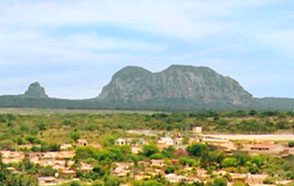
| Morning visit to the indigenous Kapinawá Reserve, where we will be able to find beautiful dry grass and straw artisan work produced by the Indians, practical ceramics, embroidery, Renaissance-style lacework and tapestries. Their cooperative spirit maintains them united and the division of labour is by sex and age. Trekking to “Serra do Elefante”. In the evening we will participate in Toré and coconut samba, dance by the Indians around the Cross of the Church of São sebastião, on the native reserve. The native song and dance is principally dedicated to their rituals. Today we obey the indigenous rituals when we eat: the main course will be “Bode no Buraco” (kid barbequed in an oven excavated in the ground). |
|
 |
|
| Day 5 (Thursday) – Buíque / Catimbau Valley |
 |
|
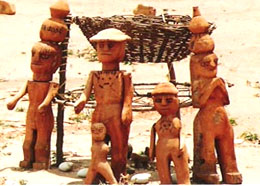
Morning trekking visit to the Canyons, an area of ridges, valleys and rocks, which impresses with its primordial magnificence, rock formations and beauty. The Catimbau Valley has dramatic rock formations, but the major attractions are the rupestrian inscriptions made at least five thousand years ago. After the Serra da Capivara Parque, this is the most important archaeological park in the country, with 23 sites catalogued. The graphics were made by tribes from different eras, and who used different painting techniques. The rocks has 50 differents natural colours (3 hours/trekking 5 km). Lunch in a typhical local house. Afternoon we take the trail to “Igrejinha” site, where we will find typical rock formations. We will visit Zé Bezerra craftworks. Dinner with folk music and dances. |
|
| Day 6 (Fri) – Buíque / Alcobaça |
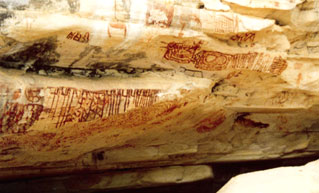
| Morning visit to the “Alcobaça Site”, where we will apreciate different archaeological area with rocky shelters and unequalled prehistoric paintings and carvings. Rupestrian paitings show how our ancestors lived: hunts, sexual orgies and unknown animals, show that not only our customs, but also the landscape have changed greatly. Prehistoric sites are woven into the vegetation of the scrub savannah. Lunch under shadow of “quixabeiras”, “juazeiros, “umbuzeiros” or “algaroba trees”. Afternoon trekking tour to Serra das Torres, ancient dead Volcano. We wont miss the unforgetable sunset from this unmissable place. |
|
 |
|
|
| Day 7 (Sat) – Buíque
/ Triunfo |
 |
|
 |
|
Today’s trip will reveal part of the marvellous Northeastern tableland. Its most characteristic forms being the old mountainous region of Borborema and the great ridges such as that of Araripe, which terminates in an escarpment. Between the escarpments and Borborema are the depressions, which are low regions and belong to the most areas in the Northeast of Brazil. The great amount of vegetation in Sopé do Relevo is the result of the large quantity of water that seeps through the rocks and forms springs at the bottom. |
|
| Day 8 (Sun) – Triunfo / Juazeiro do Norte |
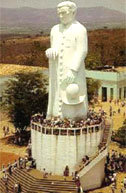
| Father Cícero Romão Batista, is the famous religious name to be heard here in the Northeast. After having supposedly worked a miracle, he was banned from saying Mass. After his death in 1934, he became a kind of popular Saint. We will see his statue, 25 metres high with an 8-metre base in the hill garden. We will visit the chapel of N Sra do Perpétuo Socorro (1908), where Father Cicero’s tomb is, and the main church of N Sra dos Dores (1887). The Father Cicero Memorial Museum has a collection of objects, paintings and photographs from the life of this Holy person. |
|
 |
|
 |
|
| Day 9 (Mon) – Juazeiro do Norte / Picos / Oeiras |
 |
|
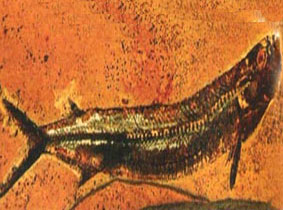
After breakfast a trip to the Palaeontological Museum in Santana do Cariri. Once, millions of years ago, covered by the sea, the Araripe ridge is one of the most important archaeological sites in the country. The museum holds more than 700 fossils of fish, insects, reptiles, amphibians and vegetation, some preserved by the arid soil of the Northeast for more than 100 million years. We continue our journey passing through Picos, a cultivated plain surrounded by mountains with sharp peaks and cut through by the rivers Itaim, Riachão and dos Guaribas. We continue on to visit the first capital of Piauí State, with its colonial houses and constructions. The National Historic and Artistic Patrimony is registered in the Episcopal Palace and the bridge over the River Mocha in Oeiras. Lodgings and dinner. |
|
|
| Day 10 (Tues) – Oeiras / Serra da Capivara |
After breakfast we set off in the direction of the Serra da Capivara National Park. Archaeological sites show human occupation from 50,000 years ago, 30,000 years before man came from Siberia. The main attractions of the park are 260 archaeological sites, with 30,000 rupestrian paintings catalogued and which are considered to be World Patrimony by UNESCO. Visit to the American Man Museum, which has the results of 30 years of investigation in the archaeological and palaeontological fields, showing the evolution of man, the climate and the landscape in America. There are tools, ceramics, archaeological remains and reproductions and moulds of rupestrian work. |
|
 |
|
| Day 11 (Weds) – Serra da Capivara |
 |
|
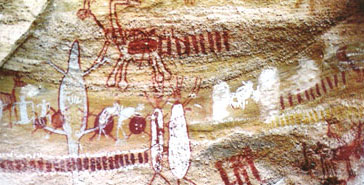
Today’s visit is to the Capivara Gorge with its magnificent archaeological sites, rich in rupestrian paintings. We follow a trail through dense vegetation to “the big mouth of the parrot” where we will find rocky shelters with unequalled prehistoric paintings. The sites on the “circuit of the small deer” are reached along a steep trail, but we will be rewarded by blue paintings, which are unique in Latin America. Then, to The Parrot’s Lair, the first archaeological site found in the park. |
|
|
| Day 12 (Thurs) – Serra da Capivara |
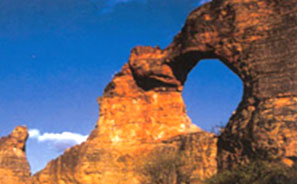
| Visit The Drop of the Perforated Stone, a 100-metre canyon, with various archaeological sites. In The mouth of the Perforated Stone we can see the oldest remains of occupation in the Americas. This is the principal attraction with handrails and nocturnal illumination. The visit to the heights of Pedra Furada is steep, but we will be rewarded by the view. We will visit Baixão do Sítio do Meio, the second most important in the Park, with rupestrian figures more than 25,000 years old. Here a worked stone hatchet was found which is 9,200 years old. We will also pass through the Baixão das Mulheres, a 60-metre canyon with three archaeological sites, noting their rupestrian painting. |
|
 |
|
| Day 13 (Fri) – Serra da Capivara |
 |
|
 |
|
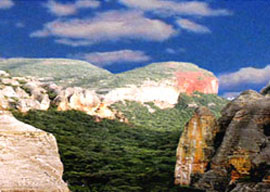
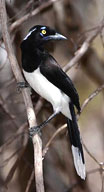
After breakfast we take the trail to Rodrigue’s Cauldron and The Canoes to appreciate the peaks and valleys of impressive ravines. The Caldeirão de Rodrigues is a reservoir with 2 archaeological sites with rupestrian paintings. In the afternoon we can see the ritual of the Swallows as they return to nest for the night, with their exquisite aerial acrobatics and characteristic calls. |
|
| Day 14 (Sat) – Serra da Capivara / Petrolina |
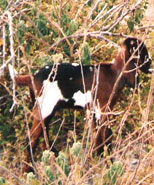
| Today we will walk through the Baixão da Perna, a 40-metre canyon, noted for its 12 archaeological sites and we won’t miss the visit to Toca de Cima do Pilão, a small grotto illuminated by solar energy. Fossils have also been found here. In we afternoon we travel to our lodgings in Petrolina (269km). We suggest dinner in the “bodódromo”, an area of bars and restaurants that specialise in goat dishes. |
|
 |
|
 |
|
| Day 15 (Sun) – Petrolina |
 |
|
 |
|
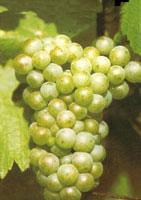
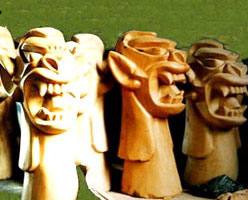
The legend says that whoever drinks the waters of São Francisco will never fail to return to Petrolina. And the legend has become fact. With its tepid and limpid warm waters, the River São Francisco is one of the great attractions of Petrolina, the fastest expanding city in the North-east. Try boat trips Ana das Carrancas Art and Cultural Centre the Hinterland Museum and the magnificent vineries. |
|