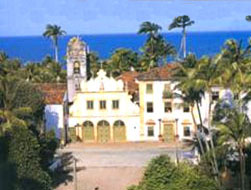
The years of Count Mauricio de Nassau’s government have gone down into history as the golden age of Dutch colonial rule. The talented politician and strategist transferred the seat of government from Olinda in 1637. A new city, Mauricea, sprung up, with paved streets, bridges and a level of urbanization previously unknown in Brazil. Two palaces crowned the labours of the administrator: Shipping, on the confluence of the Rivers Capibaribe and Beberibe, facing the sea, and Summer, outside the centre. The Governor-General surrounded himself with intellectuals, the painters Frans Prost and Albert Eckout being prominent amongst them. Then on to visit the Golden Chapel, the Synagogue, the Fort of Five Points, Sol and Aurora Streets, Brum Fort, the patio of São Pedro and Princesses’ Field. We suggest catamaran trip in Beberibe and Capibaribe rivers.
Day 2 (Mon) – Recife / Porto Galinhas / São Benedito do Sul.
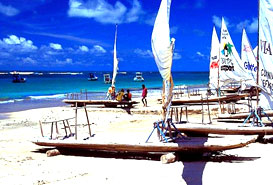
After breakfast, we continue on to the Porto de Galinhas, paradise that charms everyone, considered to be the most beautiful beach in Brazil. It is a place that harbors a bountiful nature, special for diving lovers. Tourists should take a boat tour to the reefs of rich flora and fauna, which can only be made during low tide. There are several corals and fishes with different tonalities giving a special coloring to the water. At low tide, natural swimming pools appear (rafting optional), moulded from the corals, with transparent waters and colourful small fish, which love to eat breadcrumbs from your hand. Porto de Galinhas offers white sands, an unending wall of coconut groves line that frames its entire shore and an expanse of emerald green sea wherever you look.
Day 3 (Tues) – São Benedito do Sul / Garanhuns
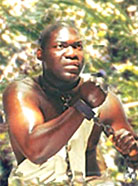
In the morning we visit Garanhuns, important in the Northeast as a rest stop and for its fairs. We can admire the old railway station and the Povoado do Castainho (Settlement of the Chestnuts), a remnant of the Negro community from the Quilombo dos Palmares (The Negro quarters during the days of slavery). Three in ten Brazilians are black or mulatto and almost four centuries of slavery still weighs on them. Once sold, the slaves had to go where their new masters sent them.
Day 4 (Weds) – Garanhuns / Águas Belas / São Francisco Lakes
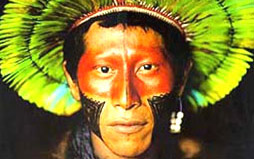
After breakfast we set out for the Indian village of Fulni-ô, where the ancestral language and many of the customs are still preserved. We will visit the main church of Nossa Senhora de Conceição (XVIII Century) and one of the largest open-air fairs in the state. We will be able to see how the Indians live in the modern Northeast. Then on to our lodgings.
Day 5 (Thurs) – São Francisco Lakes
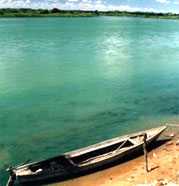
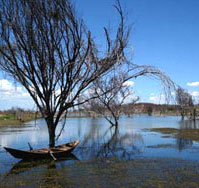
The legend says that whoever drinks of the waters of San Francisco will, never fail to return. And the legend becomes a fact. With its tepid and limpid warm waters, the River San Francisco is one of the great attractions of Pernambuco State, offers boat trips, water sports and the poetry of its waters that sing with the wind.
Day 6 (Fri) – São Francisco Lakes.
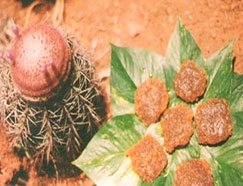
Morning trip to São Francisco Lakes. History, ecology, adventure, advanced technology in fruit and energy production make part of the “Vale do São Francisco”. The region’s diversity, with a hot and dry climate is bathed by the cold waters of the São Francisco’s River. The culinary is made up of Surubim (a noble, river water fish), goat, sheep, salt meat, dishes, delicious home made candies, rum and exportation wines. The São Francisco offers tranquility and tameness for skiing, banana boat rides and fishing. In all, that’s about exploring a land full of magic, delights and traditions. Morning boat trip.
Day 7 (Sat) – São Francisco Lakes / Tacaratu / Pankararu Reserve.
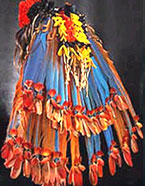
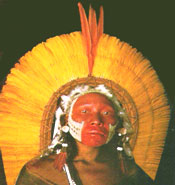
Morning visit to Pankararu indigenous reserve and the handcraft faire. The indigenous population of Brazil, 143 tribal groups, has been grouped into linguistic stems: Tupi, Aruaque, Caribe and Jê. The indigenous Pankararu reserve belongs to Tupinambá stem, living in São Francisco Lakes region. Dances and indigenous rituals. The Indians ancestors taught them only to work as much as was necessary and to share everything they produced. Their cooperative spirit maintains them united and the division of labour is by sex and age.
Day 8 (Sun) – São
Francisco Lakes / Conceição das Crioulas
/ Triunfo
Morning trip to Conceição das Crioulas, a remnant of the Negro community from the Negro Quarters during the days of slavery. For each ten brazilians, three are black or mullatos and on them weighs the inheritance of almost four centuries of captivity. Afternoon trip to Triunfo for lodging.
Day 9 (Mon) – Triunfo
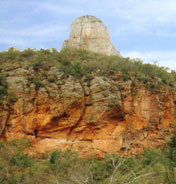
After breakfast a visit to slate (stone) Pedra do Sobrado to appreciate the wonderful view, where we will also find the agricultural research station of the Pernambuco Rural University. Today’s trip will reveal part of the marvellous Northeastern tableland. Its most characteristic forms being the old mountainous region of Borborema and the great ridges such as that of Araripe, which terminates in an escarpment. Between the escarpments and Borborema are the depressions, which are low regions and belong to the most areas in the Northeast of Brazil. The great amount of vegetation in Sopé do Relevo is the result of the large quantity of water that seeps through the rocks and forms springs at the bottom.
Day 10 (Tues) – São Francisco Lakes / Ibimirim / Buíque
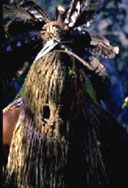
The São Francisco offers tranquility and tameness for skiing, banana boat rides and fishing. In all, that’s about exploring a land full of magic, delights and traditions. Afternoon São Francisco Lakes to Ibimirim. Visiting Quiridalho Mountain, with natural shelters and caves, registering rupestrian paintings; the Puiú Lagoon has high salinity in the left side, while in the right side we will find fresh water. Ibimirin presents a wonderful artisan work, producting hole imagens in wood, as well as, tapestries, stran and seeds work. In moon light evenings we will participate in “Praiá” rituals, danced by indians in Kambiwá reserve.
Day 11 (Weds) – Buíque / Alcobaça
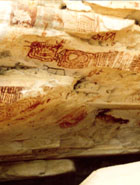
Morning visit to the “Alcobaça Site”, where we will apreciate different archaeological area with rocky shelters and unequalled prehistoric paintings and carvings. Rupestrian paitings show how our ancestors lived: hunts, sexual orgies and unknown animals, show that not only our customs, but also the landscape have changed greatly. Prehistoric sites are woven into the vegetation of the scrub savannah. Lunch under shadow of “quixabeiras”. Afternoon we take the trail to “Igrejinha” site, where we will find typical rock formations. We will visit Zé Bezerra craftworks.
Day 12 (Thurs) – Buíque / Catimbau Canyons
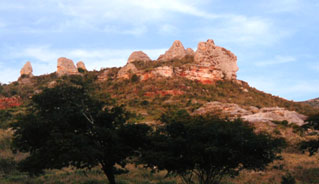
Morning trekking visit to the Canyons, an area of ridges, valleys and rocks, which impresses with its primordial magnificence, rock formations and beauty. The Catimbau Valley has dramatic rock formations, but the major attractions are the rupestrian inscriptions made at least five thousand years ago. After the Serra da Capivara Parque, this is the most important archaeological park in the country, with 23 sites catalogued. The graphics were made by tribes from different eras, and who used different painting techniques. Afternoon trekking tour to Serra das Torres, ancient dead Volcano. We won’t miss the unforgetable sunset.
Day 13 (Fri) – Buíque / Kapinawá Reserve
Morning visit to the indigenous Kapinawá Reserve, where we will be able to find beautiful dry grass and straw artisan work produced by the Indians, practical ceramics, embroidery, Renaissance-style lacework and tapestries.. The Indians ancestors taught them only to work as much as was necessary and to share everything they produced. Their cooperative spirit maintains them united and the division of labour is by sex and age. Trekking to “Serra do Elefante”. In the afternoon we will participate in Toré and coconut samba, dance by the Indians around the Cross of the Church of São sebastião, on the native reserve. The native song and dance is principally dedicated to their rituals. Today we obey the indigenous rituals when we eat: “Bode no Buraco” (kid barbequed in an oven excavated in the ground).
Day 14 (Sat) – Buíque / Caruaru / Recife
Morning departure for Caruaru, considered by UNESCO to be “the most important figurative art centre in the Americas”, outstanding for its artisan craftworks and the festivals in June, winning for itself the title of the “Forró Capital” (n.b. “Forró is the typical mid-year country dance and festival in the North-east of Brazil). We will visit the Alto do Moura, the residence and workshop of several artists who work with clay. Then, on to our lodgings in Recife.
Day 15 (Sun) – Recife / Olinda
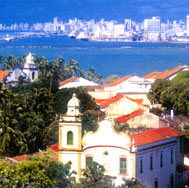
Olinda, Capital of Pernambuco until 1937, possesses important colonial architecture and because of this, in 1982, UNESCO declared its historic centre a Cultural Heritage of Humanity. The foundation of Olinda dates from 1535. The original small town was constructed by Duarte Coelho Pereira, the donee of the Captaincy of Pernambuco, and became Capital. A walking tour of the historic centre, where the Heights and Church da Sé (1537), the old slave market, the steep street to and the convent of São Francisco.
Av. Hélio
Falcão, 530 - Boa Viagem - Recife/PE - Brasil - 51021-070 | PABX: (55) 81-3328.6007 - rbm@rbmturismo.com.br