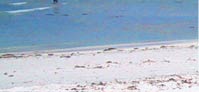
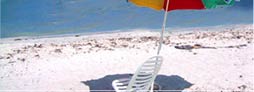
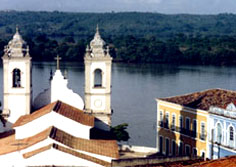
Duarte Coelho found a strategically place to install, in the high hills, the village that became Olinda. In 1637, Maurício de Nassau assumes the government. Cult, Nassau leads a urbanity revolution in the city: streets and several bridges were constructed. We visit to the city, including the beach, Boa Viagem church, the Capibaribe and Beberibe Rivers and the Golden Chapel. Trip to the Five Points Fort, streets Sol and Aurora (Old Recife), Brum Fort, Pátio de St. Pedro, Campo das Princesas, the Maurício de Nassau Bridge (the oldest in Brazil). Visit to the city of Olinda - Historic and artistic monument (said title awarded by UNESCO), the Heights and church da Sé (1537), the old slave market, the steep streets and convent of St. Francisco (1585).
Day 2. (Mon) – Recife / Maragogi / Maceió
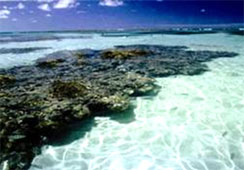
The north Alagoan Littoral, where reefs, extensive coconut groves and primitive beaches, is the last stop of the north coast, special for diving lovers. Maragogi is located at 136km from the capital Maceió. Tourists should take a catamaran tour to the-called galés, which are the reefs of rich flora and fauna. As the boat docks, tourists can already perceive the dimension of Maragogi’s beauty. The guides say that Maragogi has America’s largest continuous coral bank. There are several corals with different tonalities giving a special coloring to the water. During low tide, it does not get deeper than a meter and a half. Arriving at the pools its seems a giant aquarium. For those who like to dive, the guides usually rent snorkels and goggles.
Day 3. (Tues) – Maceió / Marechal Deodoro / French Beach
Morning visit to the historical city of Marechal Deodoro with its important architectural, artistic and religious heritage from colonial Brazil. The city was founded in 1522 and is located between the ocean and the Manguaba Lagoon. Marechal Deodoro is the birth place of the first president of Brazil, Marshal Deodoro da Fonseca, who proclaimed the Republic. Their baroque and colonial styles have been carefully preserved on its buildings, churches, houses and at the town hall. The principal attractions are the Convent of St. Francisco (1684), the original church of Our Lady of Conception (1755) and the Museum of Sacred Art, sited in a XVIII Century Franciscan convent. We go on to the French Beach with its warm and crystal waters.
Day 4. (Weds). – Maceió / St. Francisco Stuary + Historic Tour / Penedo
After breakfast, a trip in catamaran to the paradise of St. Francisco River estuary, with its deep, green waters. Old “Chico” is an icon that is part of Penedo’s local folklore. Lunch is on board, anchored in the estuary, from where we can walk along the dune covered beaches and bathe in the waters. The trip finishes in the city of Piaçabuçu It was created by Duarte Coelho in 1560 and is located alongside San Francisco River. Penedo is a historic fort where architecture, landscapes and culture are all well preserved, a reference from brazilian colonial time. Most part of the historical center is from the XVII century, tumbled by National Patrimony Heritage. When walking along the streets you travel back in time, the Empire old times.
After breakfast a boat trip to Neópoles and then on to the beach at Pirambu in order to visit the turtles at the TAMAR project and the Turtle Museum. Afternoon visit to Laranjeiras and the churches built by the Jesuits in the XVIII century: Saint Anthony’s (1701) where there was once a Jesuit convent, Our Lady of Comendoroba (1734), The Sacred Heart of Jesus (1791), and the Afro-Brazilian and Sacred museums. Shopping for artisan goods in the Municipal Market.
Day 6. (Fri) – Aracaju / São Cristóvão / Mangue Seco / Conde.
Morning departure for São Cristóvão, registered as a National Patrimony Heritage since 1939 and has developed according to the Portuguese urban model. The facades of the houses segregate the social divisions of colonial Brazil. The high city contains the headquarters of civil and religious power, downtown, with the port, plants and population of scarce resources. The high city contains the headquarters of civil and religious power, downtown, with the port, plants and population of scarce resources. Launch to Mangue Seco land of Tieta do Agreste, the unforgettable figure of Jorge Amado. The sand invading the coconut groves and the sea should not be missed. On to overnight in Conde.
Day 7. (Sat) – Conde / Siribinha / Salvador
An entire day to enjoy the marvels of Siribinha, a fishing village, with a boat trip on the River Itapicuru, stopping for a swim amongst the white dunes. Also the Itariri Bar with its dazzling dunes and coconut groves. On to overnight in Salvador.
Day 8. (Sun) – Salvador / Historical sightseeing tour
Morning sightseeing round first capital of Brazil with innumerable historic and touristic sights: the Largo (square) do Pelourinho, one of the most important areas of colonial architecture in the country; the church of St. Francis of Assisi (1686), lined with gold; the church of Bonfim (1745), the most famous for its decoration in all Bahia; the Paço Municipal; The Largo (square) and narrow streets of Vitória; the Castro Alves theatre, in the old centre of the city; the forts of St. Pedro, St. Marcelo and Mont Serrat; the architecture at the Solar do Unhão (Union Manor House), the Conceição da Praia Basilica; Frei São Joaquim (St. Joaquim Friar Maritime station); the Lacerda Elevator; the Modelo Market
Av. Hélio
Falcão, 530 - Boa Viagem - Recife/PE - Brasil - 51021-070 | PABX: (55) 81-3328.6007 - rbm@rbmturismo.com.br