Day 1. (Sun) - Salvador / Historical sightseeing tour
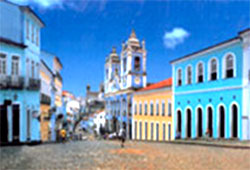
Morning sightseeing round first capital of Brazil with innumerable historic and touristic sights: the Largo (square) do Pelourinho, one of the most important areas of colonial architecture in the country; the church of St. Francis of Assisi (1686), lined with gold; the church of Bonfim (1745), the most famous for its decoration in all Bahia; the Paço Municipal; The Largo (square) and narrow streets of Vitória; the Castro Alves theatre, in the old centre of the city; the forts of St. Pedro, St. Marcelo and Mont Serrat; the architecture at the Solar do Unhão (Union Manor House), the Conceição da Praia Basilica; Frei São Joaquim (St. Joaquim Friar Maritime station); the Lacerda Elevator; the Modelo Market
Day 2. (Mon) - Salvador / Mangue Seco / São Cristóvão / Aracaju.
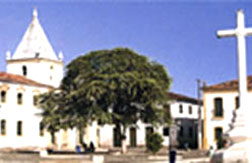
Morning departure for Mangue Seco land of Tieta do Agreste, the unforgettable figure of Jorge Amado. The sand invading the coconut groves and the sea should not be missed. We continue on to the São Cristóvão, fourth older city of Brazil and first capital of Sergipe, a position which was lost when the then provincial president, Inácio Joaquim Barbosa, moved the capital to Aracaju. São Cristóvão is registered as a National Patrimony Heritage since 1939 and has developed according to the Portuguese urban model. The facades of the houses segregate the social divisions of colonial Brazil. The high city contains the headquarters of civil and religious power, downtown, with the port, plants and population of scarce resources.
Day 3. (Tues) -
Aracaju / Penedo / St. Francisco Estuary / Maceió.
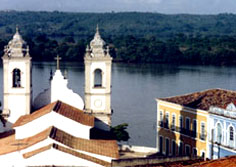
After breakfast walking visit of Penedo. It was created by Duarte Coelho in 1560 and is located alongside San Francisco River. Penedo is a historic fort where architecture, landscapes and culture are all well preserved, a reference from brazilian colonial time. Most part of the historical center is from the XVII century, tumbled by National Patrimony Heritage. When walking along the streets you travel back in time, the Empire old times. Penedo used to be a place where members of Portuguese society as well as Holland people and sailors stayed during their expeditions. Catamaran trip to the paradise of St. Francisco River estuary, with its deep, green waters. Anchored in the estuary, we can walk along the dunes covered beaches and bathe in the waters.
Day 4. (Weds) - Maceió / Marechal Deodoro / French Beach
Morning visit to the historical city of Marechal Deodoro with its important architectural, artistic and religious heritage from colonial Brazil. The city was founded in 1522 and is located between the ocean and the Manguaba Lagoon. Marechal Deodoro is the birth place of the first president of Brazil, Marshal Deodoro da Fonseca, who proclaimed the Republic. Their baroque and colonial styles have been carefully preserved on its buildings, churches, houses and at the town hall. The principal attractions are the Convent of St. Francisco (1684), the original church of Our Lady of Conception (1755) and the Museum of Sacred Art, sited in a XVIII Century Franciscan convent. We go on to the French Beach with its warm and crystal waters.
Day 5. (Thurs) - Maceió / Panoramic Tour / Croa Island
Morning visit to the Alagoan capital, beaches Pajuçara, Jatiuca and Sete Coqueiros (seven coconut groves), The square and church of the Martyrs, the Government Palace, Mirante (viewpoint) de St. Terezinha, the Cathedral, the Mundaú and Manguaba Lakes, Pontal da Barra, where we find “fillet” and “labyrinth” lace craftsmanship. We continue on to the northern seaboard, to Barra de St. Antônio, and by catamaran on to the Croa Island and its mangroves, a Nature Reserve. This island has some of the best restaurants of the northern coast, where visitors are served at the kiosks at the shoreline. We suggest (optional) Jeep Tour along Carro Quebrado beach and its wonderful faults. The great attractions are cliffs that ought to be seen on low tide.
Day 6. (Fri) - Maragogi
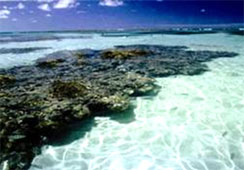
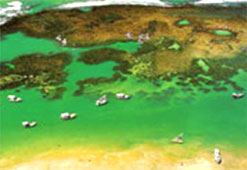
The north Alagoan Littoral, where reefs, extensive coconut groves and primitive beaches, is the last stop of the north coast, special for diving lovers. Maragogi is located at 136km from the capital Maceió. Tourists should take a catamaran tour to the-called galés, which are the reefs of rich flora and fauna. As the boat docks, tourists can already perceive the dimension of Maragogi’s beauty. The guides say that Maragogi has America’s largest continuous coral bank. There are several corals with different tonalities giving a special coloring to the water. During low tide, it does not get deeper than a meter and a half. Arriving at the pools its seems a giant aquarium. For those who like to dive, the guides usually rent snorkels and goggles.
Day 7. (Sat) - Maragogi / Porto de Galinhas / Recife.
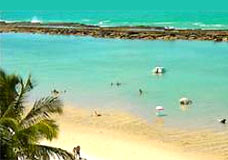
After breakfast, we continue on to the Porto de Galinhas, paradise that charms everyone, one of the greatest tourism attraction hubs of the State of Pernambuco. Paradisiacal setting shaped by crystal-clear waters inhabited by colorful fish, surrounded a long line of reefs. It is a place that harbors a bountiful nature. Tourists should take a raft tour to the reefs of rich flora and fauna. There are several corals and fishes with different tonalities giving a special coloring to the water. Exotic fauna and flora, crabs and huge mangrove roots are the innate characteristics of this itinerary. A site worth visiting is the base of Project Hippocampus, which cultivates and preserves sea horses, open daily to visitation at Manguezal de Maracaípe.
Day 8. (Sun) - Recife / Historic Tour / Olinda.
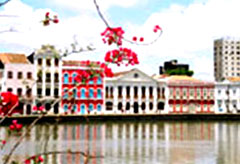
Duarte Coelho found a strategically place to install, in the high hills, the village that became Olinda. In 1637, Maurício de Nassau assumes the government. Cult, Nassau leads a urbanity revolution in the city: streets and several bridges were constructed. Visit to the city, including the beach, Boa Viagem church, the Capibaribe and Beberibe Rivers and the Golden Chapel. Trip to the Five Points Fort, streets Sol and Aurora (Old Recife), Brum Fort, Pátio de St. Pedro, Campo das Princesas, the Maurício de Nassau Bridge (the oldest in Brazil). Visit to the city of Olinda - Historic and artistic monument (said title awarded by UNESCO), the Heights and church da Sé (1537), the old slave market, the steep streets and convent of St. Francisco (1585).
Day 9. (Mon) - Recife / Igarassu / Itamaracá / João Pessoa.
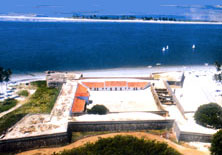
Established approximately in 1535 by the noble Duarte Coelho with the name Village of Santa Cruz and raised to the category of village in 1564, Igarassu preserves the fascinating church of the Saints Cosme and Damião, the oldest church in functioning (1535) and the third Franciscan Convent installed in Brazil, which keeps a fascinating set of panels spotted oil of century XVIII. Paintings tell us a little bit of the city’s history. People of Igarassu knew to keep its treasures of the past that today enthusiasm tourists, curious, historians and visitors from all the continents. Igarassu is located in the region where the first exploration during the Portuguese colonization took place. We will visit the famous Itamaracá Island and the Orange Fort, from where we can cross over to Coroa do Avião to enjoy bathing.
Day 10. (Tues) - João Pessoa / Pipa / Natal.
Morning visit the Center Cultural São Francisco (1589), it took 200 years almost to be ready. Its baroque set is composed for the Church of San Francisco, Convent of Saint Antonio and Museu de Cultura Popular, that it has permanent expositions of parts of the folklore, and sacred art. After visit trip to Pipa, fishing village discovered by surfers in the 1970s, one of the most frequented beaches in the state with bars and restaurants to liven the nightlife. The fishing village has incredible natural beauty with colorful half-submerged rocks, fine sands, and tepid transparent waters, not to mention the dolphins, which can be seen playing around the rocks. The Nature Reserve of Quarry Beach Marine Turtles is an ecological sanctuary.
Day 11. (Weds) - Natal / Panoramic Tour / Pirangi.
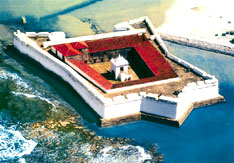
Natal is situated on the banks of the River Potengi, close to its estuary on the Atlantic Ocean, a sandy area, with dunes and coves protected by a cordon of reefs along the beach which follow the coast. In 1597 a fleet commanded by Jerônimo de Albuquerque arrived in the estuary, with the mission of founding a town and building a fort to secure Portugal’s possession. The Three Kings Fort was started in 1598. A town, which in 1599 was baptized Natal (Christmas) in honour of its foundation day, was constructed one league from the fort. The Tourist Centre, in the old gaol, contains artisan shops and a stage for folkloric spectacles. Visit to the largest Cashew tree in the world and Pirangi beach with the possibility of diving among the coral reefs.
Day 12 (Thurs) - Natal / Jacumã.
The beach 32kms north of Natal offers optimum bathing conditions as the sea is calm and clear. Jacumã also offers a complex of fixed and moving white and golden sand dunes where tourists can have an emotional ramble and also (optional) visit the Jacumã Lake set amongst the dunes where the famous sports of “aeribunda” and skibunda” (seated boarding) can be enjoyed. There is an excellent menu to choose from at the Naf-Naf restaurant in Jacumã, on the coast. This is the most charming place on the Northern Littoral!!
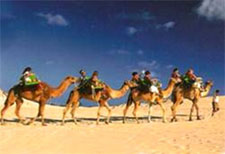
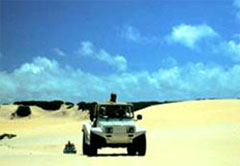
We recommend a buggy trip through the Genipabu dunes. The circuit includes stops to bathe in the waters of lake and in natural pools, and a camel ride through the dunes.
Day 13. (Fri) -
Natal / Galinhos / Canoa Quebrada.
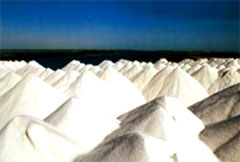
Morning trip to Galinhos, peninsula surrounded by dunes, salt-pan and river. In Galinhos the hinterland finds the sea. It’s only visit the outskirts to see the vegetation characteristic of the two regions. It has manguezais, salt mines and creation of shrimps. Fishing village since its foundation, the name appeared due the great amount of fish-rooster and the fishing agglomeration that was if forming in the beach to fish them. Galinhos is only accessible from the sea or by buggy, becoming almost an island. It is well worth viewing the sea below from the heights, and, looking behind us, the immensity of the dunes. More to the front, the river cutting through the mangroves. One of the most beautiful stretches of this littoral
Day 14. (Sat) -
Canoa Quebrada / Fortaleza.
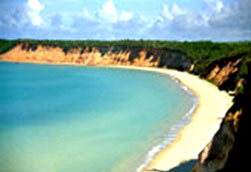
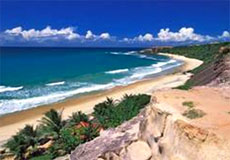
Morning visit to Canoa Quebrada with its dunes of very fine sand, colorful faults extending like a wall facing the sea and warm waves.A place that surprises for the paradisiacal beauty. In 1650, the Portuguese navigator Francisco Ayres of Cunha stagnated in the coast of Canoa Quebrada. When it arrived in earth gave his broken arm to master Sebastião. It was then that the name Canoa Quebrada appeared. Canoa Quebrada is a beach located in the coast east of the State of Ceará to 166km of Fortaleza. Canoa offer a great variety of attractions among bars, restaurants and nightclubs. This is a beach for those seeking entertainment (Broadway Street). Lunch (optional) under canvas on the coast and after passing an unforgettable day on to Fortaleza and lodgings.
Day 15. (Sun) - Fortaleza / City Tour / Cumbuco
Morning visit to the city including: the coast road with the Iracema Meireles and do Futuro beaches; the Art and Popular Culture Museum, Metropolitan Culture Centre, Fortaleza Nossa Senhora (XVII Century), the José de Alencar Theatre and the Tourism Centre, where it is not possible to resist the purchase of local artisan craft in wood, ceramic, and “fillet” and “labyrinth” lace work. The principal attraction of the Cumbuco beach is its dunes with their fine white sand. Here every body has a buggy trip and goes esquibunda, Ceará’s most popular sport, where one boards - seated or standing - down the dunes. The buggy trips can be “with or without excitement”, be prepared to negotiate dunes of up to 10 meters in height.
Av. Hélio
Falcão, 530 - Boa Viagem - Recife/PE - Brasil - 51021-070 | PABX: (55) 81-3328.6007 - rbm@rbmturismo.com.br