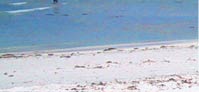
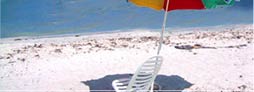
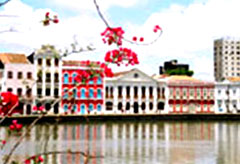
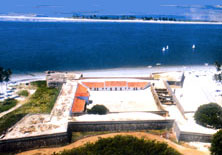
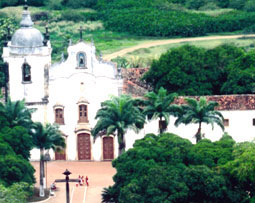
Duarte Coelho found a strategically place to install, in the high hills, the village that became Olinda. In 1637, Maurício de Nassau assumes the government. Cult, Nassau leads a urbanity revolution in the city: streets and several bridges were constructed. Visit to the city, including the beach, Boa Viagem church, the Capibaribe and Beberibe Rivers and the Golden Chapel. Trip to the Five Points Fort, streets Sol and Aurora (Old Recife), Brum Fort, Pátio de St. Pedro, Campo das Princesas, the Maurício de Nassau Bridge (the oldest in Brazil). Visit to the city of Olinda - Historic and artistic monument (said title awarded by UNESCO), the Heights and church da Sé (1537), the old slave market, the steep streets and convent of St. Francisco (1585).
Day 2. (Mon) – Igarassu / Itamaracá.
Visit Igarassu, cradle of the state’s history (1535), when it received the Portuguese entourage, which was led by the then donee Duarte Coelho Pereira, the Captain of Pernambuco. We will find roughly stoned streets, simple rows of houses, ancient ingenuities, and religious buildings, such as the church of the Saints Cosme and Damião (1535 – the oldest in Brazil) and the Convent of Santo Antônio, home of the gallery most representative of colonial art. Then on to Itapissuma to sail by catamaran, between mangroves, to “Coroa do Avião” where you find delicious seafood. Afternoon visit Vila Velha and Orange Fort connected by a wonderful trial, the one the deuth used to do. Night with dinner and Ciranda show.
Day 3 (Tues) –Aparauá/ Rio Goiana Estuary / Goiana
After breakfast trekking in the Atlantic Forest, attraction of the tour considered unmissable, sheltering 70 species of animals. We finish up tired, but only physicall, mentally you feel great. After lunch, we will navigate along the Goiana’s River, the ancient transportation for the sugar sacks fabricated in the region. The Northeastern littoral offered such favorable conditions for the cultivation of sugar cane that it became a lucrative and less laborious activity. Favored by the warm, humid climate, the fertile “massapê” (black clayish) soil and the flat relief, cane farming rapidly took over the region, initiating the sugar-cane cycle. The municipality of Goiana sprung up in 1570, on lands of the Seismarias de Diogo Dias, the flatlands alongside the River Capibaribe Mirin.
Day 4. (Weds) – João Pessoa/Natal.
Morning departure for the Paraiban capital, the third urban centre to be created in Brazil, João Pessoa registers in its history the presence of the French, Dutch and Portuguese. It is an important tourist centre in the Northeast, as besides having beautiful beaches, it is one of the cities with the most trees in the world. João Pessoa is the capital of the state of Paraíba. Ponta do Seixas, next to White Cape, on Tambaú beach you will find the most easterly point of South America. Among its many baroque monuments, the Franciscan complex, which was started in 1589, stands out. Cabedelo owes its name to the fine-sand dunes which form on its beaches. From the colonial past, the church of Our guiding Lady (XVI Cent) and the Santa Catarina Fort stand out.
Day 5 (Thurs) – Natal / Jacumã.
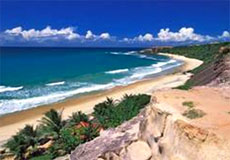
The beach 32kms north of Natal offers optimum bathing conditions as the sea is calm and clear. Jacumã also offers a complex of fixed and moving white and golden sand dunes where tourists can have an emotional ramble and also (optional) visit the Jacumã Lake set amongst the dunes where the famous sports of “aeribunda” and skibunda” (seated boarding) can be enjoyed. There is an excellent menu to choose from at the Naf-Naf restaurant in Jacumã, on the coast. This is the most charming place on the Northern Littoral!!
We recommend a buggy trip through the Genipabu dunes. The circuit includes stops to bathe in the waters of lake and in natural pools, and a camel ride through the dunes.
Day 6. (Fri) – Natal / Pipa / Cariri.
Pipa is a fishing village discovered by surfers in the 1970s, one of the most frequented beaches in the state with bars and restaurants to liven the nightlife. The fishing village has incredible natural beauty with colorful half-submerged rocks, fine sands, and tepid transparent waters, not to mention the dolphins, which can be seen playing around the rocks. The spectacle starts while we are still on the road, near to neighboring Tibau do Sul, with the unusual view of the lagoon emptying into the sea between the russet hillsides. The rectilinear splendor of Madeira Beach, the serene Bay of the Dolphins, where they can be seen at the end of the afternoon, and the tempestuous waves of Praia do Amor (Love Beach), the preference of lovers and surfers, are all unique. The Nature Reserve of Quarry Beach Marine Turtles is an ecological sanctuary.
Day 7. (Sat) – Cariri/ Ingá / Areia / Recife
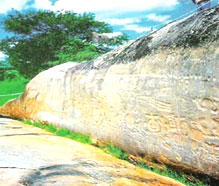
Breakfast, then to Ingá, where we can find the principal Brazilian archaeological monument. This is a granite block 23m long (74’ 9”), covered with enigmatic symbols, carved by the Indians thousands of years ago. Then on to Areia. This small city, also known as Ouro Preto do Sertão (Black Gold in the Wilderness), boasts a row of XIXth and early XXth Century houses, as well as “Engenhos” (Old Sugar Mills) from that period. Lunch in a city restaurant and then on to appreciate the scrub savannah, extremely exotic scenery.
Day 8. (Sun) – Recife / Historic Tour.
The years of Count Mauricio de Nassau’s government have gone down into history as the golden age of Dutch colonial rule. The talented politician and strategist transferred the seat of government from Olinda in 1637. A new city, Mauricea, sprung up, with paved streets, bridges and a level of urbanization previously unknown in Brazil. Two palaces crowned the labours of the administrator: Shipping, on the confluence of the Rivers Capibaribe and Beberibe, facing the sea, and Summer, outside the centre. The Governor-General surrounded himself with intellectuals, the painters Frans Prost and Albert Eckout being prominent amongst them. Then on to visit the Golden Chapel, the Synagogue, the Fort of Five Points, Sol and Aurora Streets, Brum Fort, the patio of São Pedro and Princesses’ Field. We suggest catamaran trip in Beberibe and Capibaribe rivers.
Av. Hélio
Falcão, 530 - Boa Viagem - Recife/PE - Brasil - 51021-070 | PABX: (55) 81-3328.6007 - rbm@rbmturismo.com.br