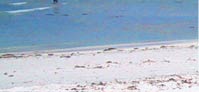
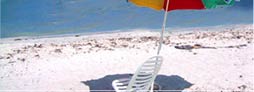
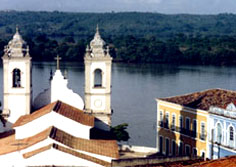
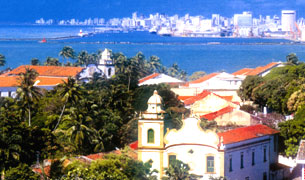
Duarte Coelho found a strategically place to install, in the high hills, the village that became Olinda. In 1637, Maurício de Nassau assumes the government. Cult, Nassau leads a urbanity revolution in the city: streets and several bridges were constructed. Visit to the city, including the beach, Boa Viagem church, the Capibaribe and Beberibe Rivers and the Golden Chapel. Trip to the Five Points Fort, streets Sol and Aurora (Old Recife), Brum Fort, Pátio de St. Pedro, Campo das Princesas, the Maurício de Nassau Bridge (the oldest in Brazil). Visit to the city of Olinda - Historic and artistic monument (said title awarded by UNESCO), the Heights and church da Sé (1537), the old slave market, the steep streets and convent of St. Francisco (1585).
Day 2. (Mon) – Recife / Maragogi / Maceió
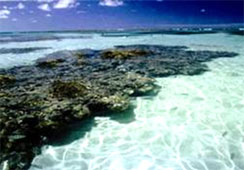
The north Alagoan Littoral, where reefs, extensive coconut groves and primitive beaches, is the last stop of the north coast, special for diving lovers. Maragogi is located at 136km from the capital Maceió. Tourists should take a catamaran tour to the-called galés, which are the reefs of rich flora and fauna. As the boat docks, tourists can already perceive the dimension of Maragogi’s beauty. The guides say that Maragogi has America’s largest continuous coral bank. There are several corals with different tonalities giving a special coloring to the water. During low tide, it does not get deeper than a meter and a half. Arriving at the pools its seems a giant aquarium. For those who like to dive, the guides usually rent snorkels and goggles. Afternoon to Maceió.
Day 3. (Tues) – Maceió / Marechal Deodoro / French Beach
Morning visit to the historical city of Marechal Deodoro with its important architectural, artistic and religious heritage from colonial Brazil. The city was founded in 1522 and is located between the ocean and the Manguaba Lagoon. Marechal Deodoro is the birth place of the first president of Brazil, Marshal Deodoro da Fonseca, who proclaimed the Republic. Their baroque and colonial styles have been carefully preserved on its buildings, churches, houses and at the town hall. The principal attractions are the Convent of St. Francisco (1684), the original church of Our Lady of Conception (1755) and the Museum of Sacred Art, sited in a XVIII Century Franciscan convent. We go on to the French Beach with its warm and crystal waters.
Day 4. (Weds) – Maceió / Historic Tour + Foz de São Francisco / Penedo.
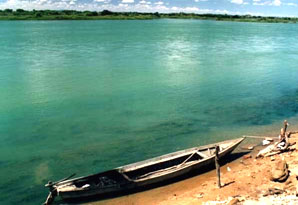
After breakfast, a trip in catamaran to the paradise of St. Francisco River estuary, with its deep, green waters. Old “Chico” is an icon that is part of Penedo’s local folklore. Lunch is on board, anchored in the estuary, from where we can walk along the dune covered beaches and bathe in the waters. The trip finishes in the city of Piaçabuçu It was created by Duarte Coelho in 1560 and is located alongside San Francisco River. Penedo is a historic fort where architecture, landscapes and culture are all well preserved, a reference from brazilian colonial time. Most part of the historical center is from the XVII century, tumbled by National Patrimony Heritage. When walking along the streets you travel back in time, the Empire old times.
Day 5. (Thurs) – Penedo / Xingó / Catamarã Canyons
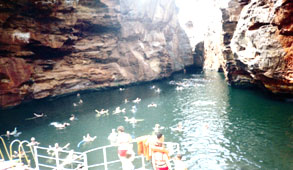
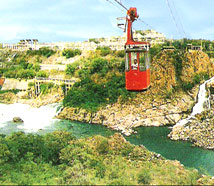
Morning visit to the Chesf viewpoint (Hydroelectric Power Station) the second biggest of Brazil and sixth of the world between Alagoas and Sergipe. Then by catamaran to the Canyons of São Francisco, passing rock formations (Pedra do Japonês [The Japanese Stone], da Gaviota [the Seagull Stone]), Morro do Macaco (Monkey Peak), and Paraíso do Talhado (Carved Paradise), enjoying the sparkling scenery of the entire canyon which borders Velho Chico. At Talhado tourists can swim in the green clean water of the river. Evenight meal at the hotel with folk dances.
Day 6. (Fri) – Paulo Afonso / Raso da Catarina
Morning visit in wagon pulled by tractor to “Raso da Catarina”, biological reserve of scrubs savannah, with rocky formations sculpture by the wind, flourishing the São Francisco Canyons. Trekking tour (3 hours) by the river. We suggest Bungee Jump from “São Pedro” bridge (85m) on São Francisco river and Ferry Cable Stroll on San Francisco Canyon (100m).
Day 7 (Sat) – Paulo Afonso / São Francisco Lakes.
Morning trip to São Francisco Lakes. History, ecology, adventure, advanced technology in fruit and energy production make part of the “Vale do São Francisco”. The region’s diversity, with a hot and dry climate is bathed by the cold waters of the São Francisco’s River. The culinary is made up of Surubim (a noble, river water fish), goat, sheep, “carne de sol” (salt meat), dishes, delicious home made candies, rum and exportation wines.
Day 8 (Sun) and Day 9 (Mon) – São Francisco Lakes
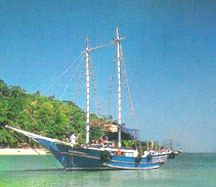
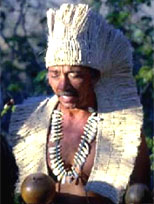
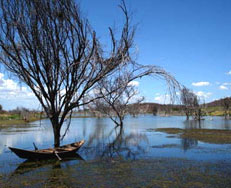
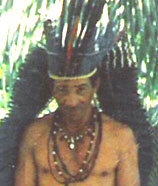
The São Francisco offers tranquility and tameness for skiing, banana boat rides and fishing. In all, that’s about exploring a land full of magic, delights and traditions. Morning schooner trip on the lake. Afternoon visit the indigenous Pankararu Reserve. We won’t miss Pankararu.
Day 10 (Tues) – São
Francisco Lakes / Ibimirim / Buíque
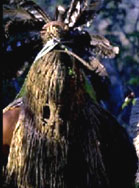
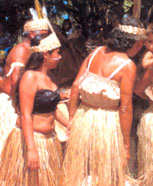
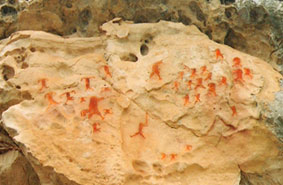
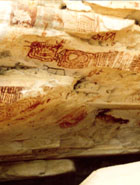
Morning visit Quiridalho Mountain, with natural shelters and caves, registering rupestrian paintings; the Puiú Lagoon has high salinity in the left side, while in the right side we will find fresh water. Ibimirin presents a wonderful artisan work, producting hole imagens in wood, as well as, tapestries, straw and seeds work. In moon light evenings we will participate in “Praiá” rituals, danced by indians in Kambiwá reserve.
Day 11 (Weds) – Buíque / Kapinawá Reserve
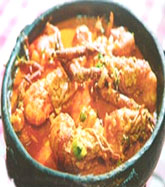
We visit to the indigenous Kapinawá Reserve, where we will be able to find beautiful dry grass and straw artisan work produced by the Indians. Their cooperative spirit maintains them united and the division of labour is by sex and age. Trekking to “Serra do Elefante”. In the afternoon we will participate in Toré and coconut samba, dance by the Indians around the Cross of the Church of São Sebastião, on the native reserve. The native song and dance is principally dedicated to their rituals. Today we obey the indigenous rituals when we eat: “Bode no Buraco” (kid barbequed in an oven excavated in the ground).
Day 12 (Thurs) – Buíque / Catimbau Valley
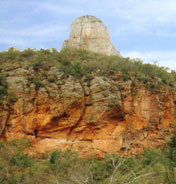
Morning trekking visit to the Canyons, an area of ridges, valleys and rocks, which impresses with its primordial magnificence, rock formations and beauty. The Catimbau Valley has dramatic rock formations, but the major attractions are the rupestrian inscriptions made at least five thousand years ago. After the Serra da Capivara Parque, this is the most important archaeological park in the country, with 23 sites catalogued. The graphics were made by tribes from different eras, and who used different painting techniques. Afternoon we take the trail to “Igrejinha” site, where we will find typical rock formations. We will visit Zé Bezerra craftworks.
Day 13 (Fri) – Buíque / Alcobaça Site
Morning visit to the “Alcobaça Site”, where we will apreciate different archaeological area with rocky shelters and unequalled prehistoric paintings and carvings. Rupestrian paintings show how our ancestors lived: hunts, sexual orgies and unknown animals, show that not only our customs, but also the landscape have changed greatly. Prehistoric sites are woven into the vegetation of the scrub savannah. Lunch under shadow of “quixabeiras”. Afternoon trekking tour to Serra das Torres, ancient dead Volcano. We won’t miss the sunset from this unmissable place.
Day 14 (Sat) – Buíque / Caruaru / Recife
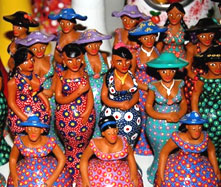
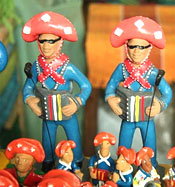
Morning departure for Caruaru, considered by UNESCO to be “the most important figurative art centre in the Americas”, outstanding for its artisan craftworks and the festivals in June, winning for itself the title of the “Forró Capital” (n.b. “Forró is the typical mid-year country dance and festival in the North-east of Brazil). We will visit the Alto do Moura, the residence and workshop of several artists who work with clay.
Day 15 (Sun) - Recife / Olinda.
The Capital of Pernambuco until 1937, Olinda possesses important colonial architecture and because of this, in 1982, UNESCO declared its historic centre a Cultural Heritage of Humanity. The foundation of Olinda dates from 1535. The original small town was constructed by Duarte Coelho Pereira, the donee of the Captaincy of Pernambuco, and became Capital. A walking tour of the historic centre, where the Heights and Church da Sé (1537), the old slave market, the steep street to and the convent of São Francisco (1585), the Episcopal Palace and the São Bento Monastery, which ran the first ever law course in Brazil, all stand out.
Av. Hélio
Falcão, 530 - Boa Viagem - Recife/PE - Brasil - 51021-070 | PABX: (55) 81-3328.6007 - rbm@rbmturismo.com.br