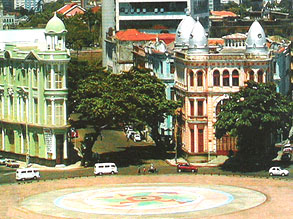
The years of Count Mauricio de Nassau’s government have gone down into history as the golden age of Dutch colonial rule. The talented politician and strategist transferred the seat of government from Olinda in 1637. A new city, Mauricea, sprung up, with paved streets, bridges and a level of urbanization previously unknown in Brazil. Two palaces crowned the labours of the administrator: Shipping, on the confluence of the Rivers Capibaribe and Beberibe, facing the sea, and Summer, outside the centre. The Governor-General surrounded himself with intellectuals, the painters Frans Prost and Albert Eckout being prominent amongst them. Then on to visit the Golden Chapel, the Synagogue, the Fort of Five Points, Sol and Aurora Streets, Brum Fort, the patio of São Pedro and Princesses’ Field. We suggest catamaran trip in Beberibe and Capibaribe rivers.
Day 2 (Mon) – Recife / Tracunháem / Vicência
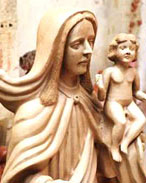
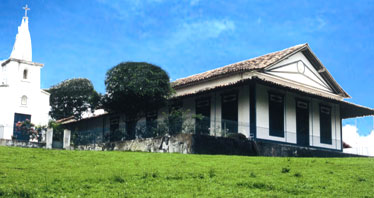
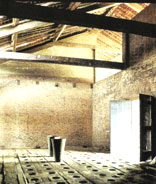
The city of Tracunhaém is situated in the Pernambucan forests, where artisan ceramics dominate the economic activities, being one of the largest and best centres of ceramic art in our country. The artisans model figures of saints, animals, and decorative and utilitarian objects from clay. This upcountry art, with its hinterland roots, is admired for its originality and creativity. Visit to the artisans and overnight in Engenho Jundiá. The Jundiá sugar mill reveals more than 120 years of history through photo registers, furniture and objects found in the casa grande (master’s house). It has it’s architectural set, a chapel, the casa grande (master’s house), a moita and casa de purgar. There are gliding and hang gliding practice points in the sugar Mill.
Day 3 (Tues) – Engenho Jundiá (Vicência)
Morning visit the old Engenho Jundiá and a typical rural school, with the possibility of horseback riding, trekking in the woods, hang-gliding. This is a region which cultivates from sugar cane to bananas, making use of the remains to produce creative and perfect utilitarian handicrafts.
The banana deserves to be popular for it's productivity in a small space, it's pleasing landscape qualities, and, of course, it's delicious fruit. But the fact remains that the banana is a warm weather plant.
Day 4 (Weds) – Engenho Jundiá (Vicência) / Poço Comprido
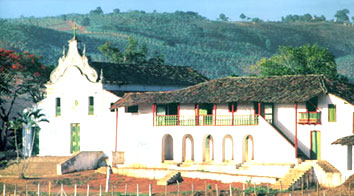
Morning visit to Poço Comprido (1750), an old mansion restored by the National Heritage Foundation. The sugar-cane “Engenhos” were self-sufficient producing “mascavo” sugar (black sugar). The “moita” (local of the basic machinery and installations for the attainment of the sugar and even of cachaça (Brazilian brandy); the great house (housing of the family proprietor); the senzala (home of the slaves); the small chapel; and a school. In the property, next to the canaviais, a land parcel existed reserved for the cattle and subsistence cultures.
Day 5 (Thrus) – Engenho Jundiá (Vicência)
Martim Alfonso de Souza introduced the sugar-cane in Brazil, in 1522, in the captainship of São Vicente. But, it was in Pernambuco that it blossomed, concurring only with the culture of cotton in the 18’th and 19’th centuries. The Northeastern littoral offered very favourable conditions for the cultivation of sugar cane. Favoured by the warm, humid climate, the fertile “massapê” (black clayish) soil and the flat relief, cane farming rapidly took over the region, initiating the sugar-cane cycle.
Day 6 (Fri) – Vicência / Porto de Galinhas
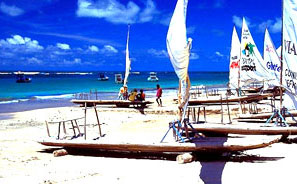
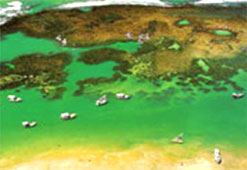
After breakfast, we continue on to the Porto de Galinhas, paradise that charms everyone, one of the greatest tourism attraction hubs of the State of Pernambuco. It is a place that harbors a bountiful nature. Tourists should take a raft tour to the reefs of rich flora and fauna. There are several corals and fishes with different tonalities giving a special coloring to the water. Exotic fauna and flora, crabs and huge mangrove roots are the innate characteristics of this itinerary. A site worth visiting is the base of Project Hippocampus, which cultivates and preserves sea horses, open daily to visitation at Manguezal de Maracaípe.
Day 7 (Sat) – Porto de Galinhas / Olinda
Paradisiacal setting shaped by crystal-clear waters inhabited by colorful fish, surrounded a long line of reefs. The region offers other options, just as gorgeous. The paradisiacal beaches of Gambia, Muro Alto, Cupe, Vila de Porto de Galinhas, Pontal de Maracaípe, Serrambi and Calhetas. To get to these almost untouched lands, visitors can resort to buggies. A Buggy Association offers the best option which is to take the tour from back-to-back through the main beaches in two hours. Colorful reefs and fish in natural pools. The best alternative to explore these beauties is taking raft tours, which can only be made during low tide.
Day 8 (Sun) – Olinda
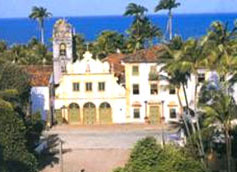
Duarte Coelho, donator of the Captainship of Pernambuco found a strategically place to install, in the high hills, where there was a small village called Marim, constructed by the indians, installing there the village that became Olinda. The Capital of Pernambuco until 1937, Olinda possesses important colonial architecture and because of this, in 1982, UNESCO declared its historic centre a Cultural Heritage of Humanity. The foundation of Olinda dates from 1535. The original small town was constructed by Duarte Coelho Pereira, the donee of the Captaincy of Pernambuco, and became Capital. A walking tour of the historic centre, where the Heights and Church da Sé (1537), the old slave market, the steep street to and the convent of São Francisco (1585), the Episcopal Palace and the São Bento Monastery.
Av. Hélio
Falcão, 530 - Boa Viagem - Recife/PE - Brasil - 51021-070 | PABX: (55) 81-3328.6007 - rbm@rbmturismo.com.br